⭐⭐ ⭐

 (BBC)
(BBC)
I’ve been a Doctor Who fan my whole life. And I don’t just mean “Oh, I watched it when I was a kid.” I’m talking Doctor Who Magazine subscriptions. Seeing the BBC National Orchestra of Wales perform Murray Gold’s fantastic score not once, but twice, both at the 60th anniversary celebration and at the most recent Proms. Murray Gold being my number one artist on Spotify Wrapped more times than I care to admit. I even hosted a lockdown podcast doing a series eight rewatch! As I sit here writing this review, the Tenth Doctor’s sonic screwdriver is staring right at me.
So when I first heard the news about the new five-episode miniseries, The War Between the Land and the Sea, I was sceptical. Russell T Davies’ return to the “Whoniverse” has been somewhat rocky. The 60th anniversary episodes were fine, but ultimately overshadowed by the nostalgia for the return of DoctorDonna (David Tennant and Cathrine Tate), while the Fifteenth Doctor’s (Ncuti Gatwa) run has been a mixed bag. If this new series was going to feel like this latest iteration of Who, but with a focus on thinly written UNIT characters, I wasn’t sure it was going to be for me.
Boy, was I wrong.
The War Between the Land and the Sea has, so far, been excellent. It’s a miniseries that looks fantastic, with strong drama, real tension, and an intriguing central premise: what would you do if a species that inhabited Earth long before humanity suddenly returned and demanded equal claim to the planet, or else war would ensue?
And yes, as the title suggests, The War Between the Land and the Sea should be taken literally. The human race vs Homo Aqua, a new name for The Sea Devils; a classic Doctor Who monster that has appeared multiple times across both classic and New Who.
In this series, we see flashes of the creative mind that has brought us some of the most iconic British television of the past 20 years. And I don’t just mean Doctor Who. I’m talking about bold, unsettling dramas like Years and Years, It’s a Sin, A Very British Scandal, Queer as Folk, and more. Russell T Davies is at his best when he leans into the political, and The War Between the Land and the Sea is no exception.
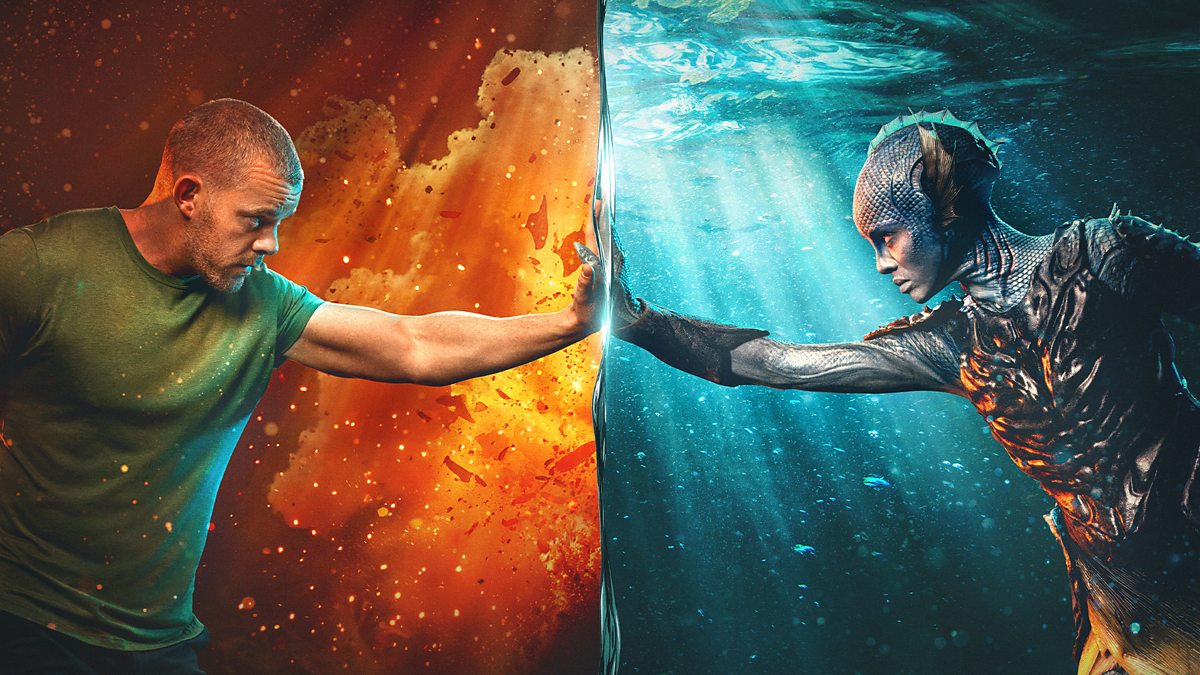
The first two episodes play out almost like a courtroom drama, forcing humanity to confront the consequences of its reckless treatment of the planet. Pumping plastic, sewage, and God-knows-what-else into every body of water we can find hasn’t just endangered our own future, it has devastated an entire subterranean species. Homo Aqua, led by Gugu Mbatha-Raw’s Salt, issue an ultimatum to the human race, represented by Ambassador Russel Tovey’s Barclay Pierre Dupoint: clean up the water, or face war for the planet.
Supporting the story are familiar faces from UNIT, the Unified Intelligence Taskforce, Doctor Who’s answer to a global alien defence force. Jemma Redgrave shines as Kate Lethbridge-Stewart, delivering some genuinely cracking one-liners while finally being given a level of emotional complexity rarely afforded to her on the main show.
The series does lose a little momentum in its fourth episode, where the carefully built tension of the previous three instalments is sidelined in favour of melodrama. With Barclay and Salt on the run, the aforementioned tension grinds to a halt, with some quite predictable dialogue and what is perhaps the most open discussion of a particular aspect of male anatomy in Doctor Who history. Episode four was indeed enjoyable, however I would have preferred the penultimate to have me reeling for the finale as opposed to slowing down for the more character focused moments.
With the final episode airing on Sunday, I’m eager to see how the story concludes. With war looming, the stakes still at an all-time high, and (SPOILERS) Salt swimming through the murky, brown waters of the Thames, I’m curious as to how this story will wrap up in the final 45 minutes of the story.
Will The War Between the Land and the Sea sink or swim in its final outing. I suppose I’ll have to tune in to BBC One on Sunday to find out.

Comments
Post a Comment